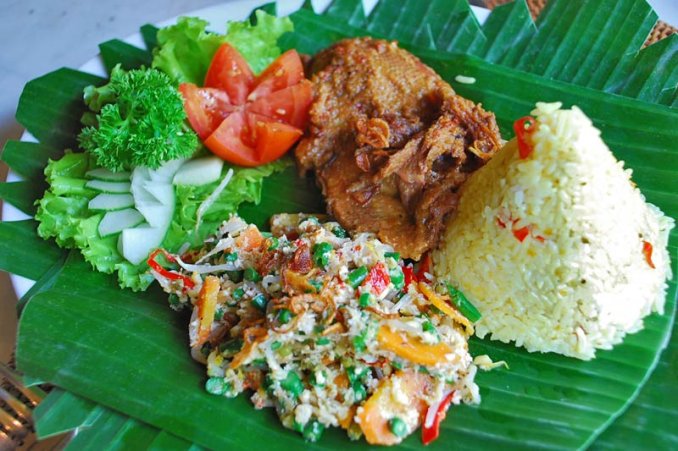
Balinese deep fried duck or smoked duck are two variations of many traditional duck dishes. One consists of duck that has been seasoned and then steamed or boiled before being deep-fried (bebek goreng). The other has the duck wrapped and marinated with local seasonings and then smoked for 24 hours (bebek betutu).
Expect the meat to be lean, flaking off the bone and incredibly tasty. All usually served with rice, sambals and local vegetable sides.
Long established Bebek Bengil, or ‘dirty duck’ in English, is an established restaurant really does serve up some mean duck. Their portions are large and prices on the higher side but very reasonable in comparison to where the locals might dine. Their crispy duck is so crisp that although some may consider it borderline dry, if you enjoy your skin extra crispy to the point where small bones are crunchy treats you’ll love how Bebek Bengil does it.
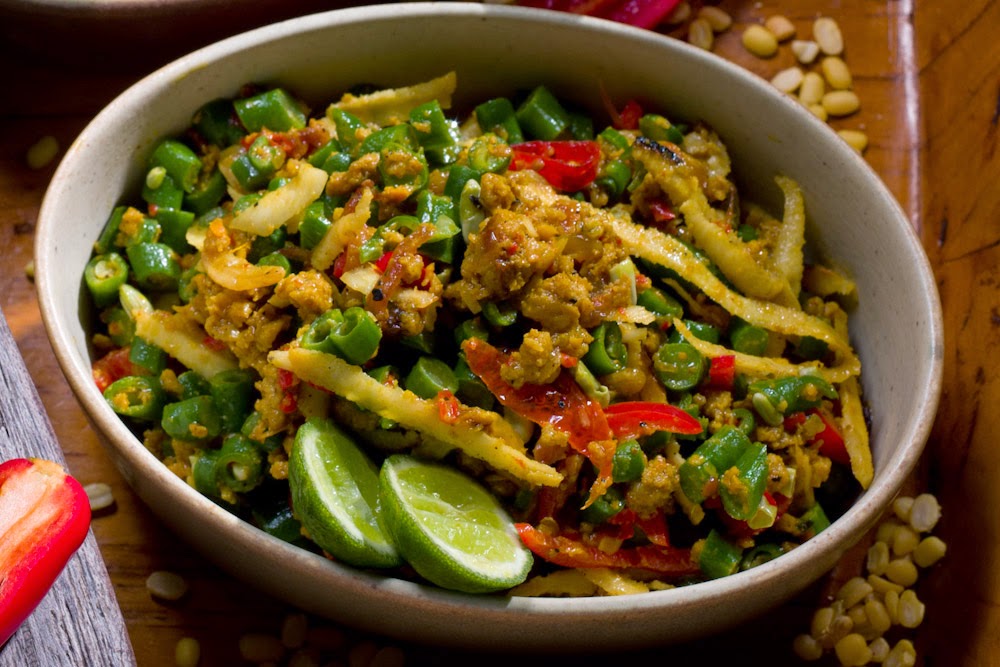
Lawar is a traditional mix containing fine chopped meat, vegetables, grated coconut and spices. Sometimes, and in some areas, lawar is prepared using fresh blood mixed with the meat and spices to strengthen the flavour. Lawar are usually served immediately after preparation as it cannot be kept long. There are two main types of lawar, white and red. The white version usually does not contain any meats or blood.
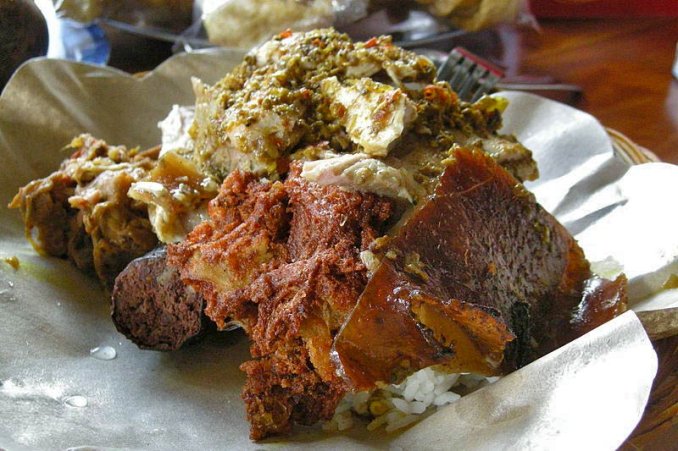
Babi guling is an all-time favourite, consisting of spit-roast pig stuffed with rich traditional spices and vegetable mixes such as cassava leaves, slowly ‘rolled’ over (hence its name, guling means ‘to roll’) a coal fire. The crisp brown skins are prized, while the meat is a tender and juicy treat. At first the dish was a communal treat only during special festivities and ceremonies, but now babi guling can be found widely served at warungs and restaurants specialising in this dish.
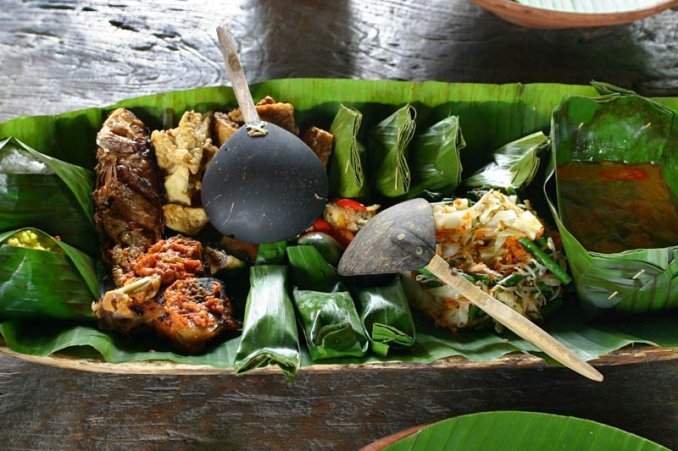
Pepes is an Indonesian Sundanese cooking method using banana-leaf as food wrappings. The small package is sewed with thin bamboo sticks at both ends, and either steam-cooked, boiled or grilled. It is most commonly used to prepare fish as “pepes ikan” or meat, chicken, tofu or vegetables. Tum takes on a different form, with the wrapping folded and stitched at one top end, and usually steam-cooked. The banana-leaf wrapping provides a special aromatic appeal to the cooked blend.
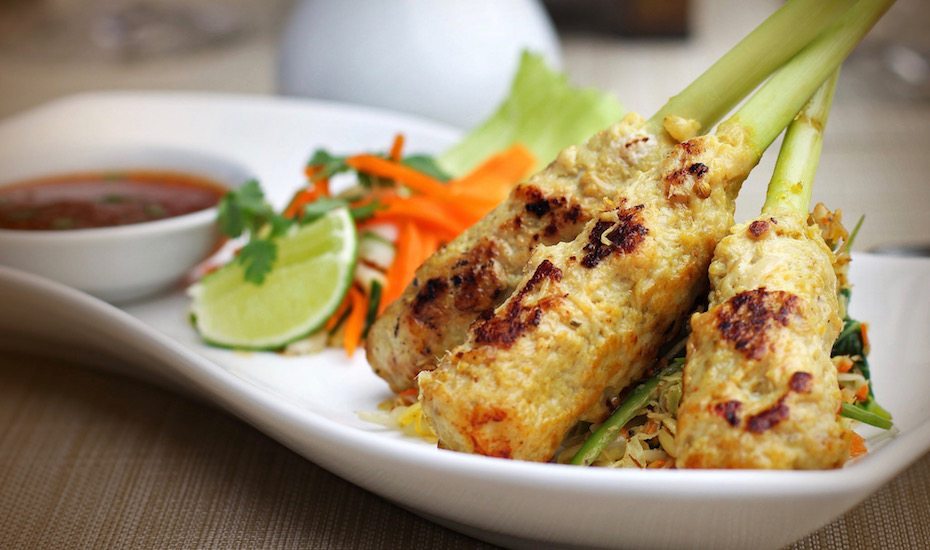
We’ve all tried satay (grilled skewered meat) before – it’s almost everywhere in Southeast Asia. But not everyone has had the pleasure of tasting traditional Balinese sate lilit ikan (fish satay). Skewered and spiced, minced fish is grilled over charcoal or an open fire (sometimes on the side of the road) and the result is a slightly sweet, slightly spicy and totally delicious morsel moulded around a lemongrass stalk or wooden stick. It’s best enjoyed with a healthy dose of sambal – naturally.
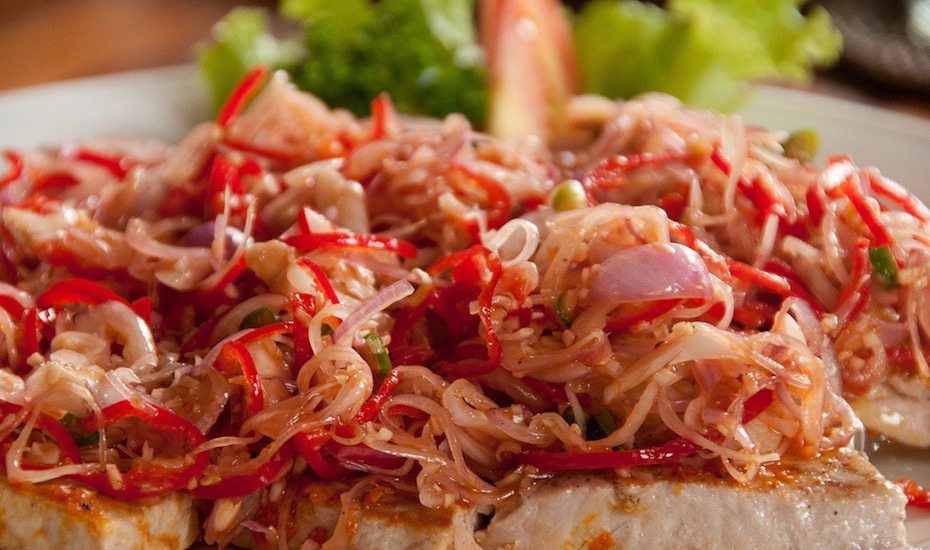
It’s said there are over 300 variations of sambal in Indonesia, but so far, Sambal Matah is our ultimate fave. It’s Bali’s own version of sambal, and a delicious, spicy staple for any Balinese dish. It’s made by finely chopping raw shallots, lemongrass, garlic, chilli and lime, then kneading it all together with hot oil, salt, sugar and a dash of shrimp paste. It’s best enjoyed on fresh fish or chicken, or if you’re like us, you can just dig in with a spoon.
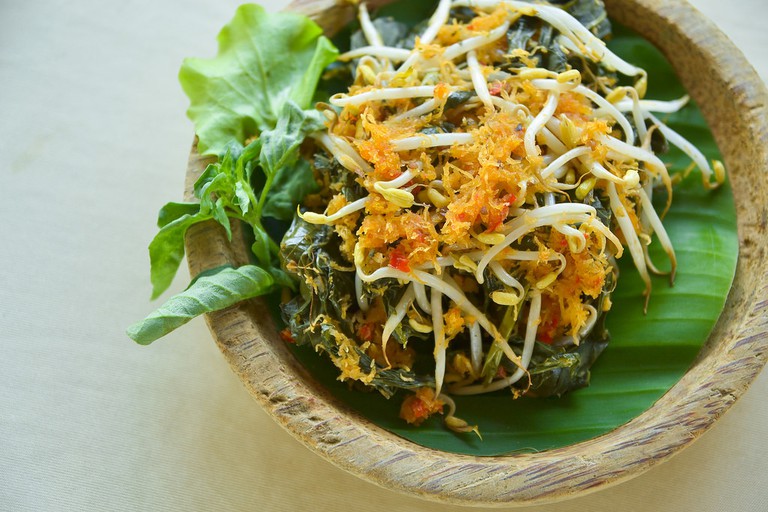
Many tourists will find their Balinese diet dominated with meat, especially pork and chicken. But the people of Bali also know exactly how to work their vegetables. Urab (also urap) is a traditional vegetable salad with coconut dressing. It consists of a wide array of steamed or raw vegetables, including green beans, cabbage, bean sprouts, spinach, and cassava leaves. You can enjoy urab on its own or as a side dish. It’s a vegetarian-friendly meal rich in both flavor and nutrients.
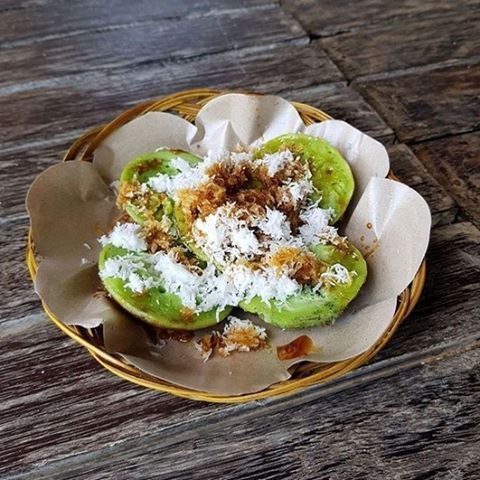
Laklak is Balinese traditional cake made from rice flour and coconut milk. Laklak got its green color from suji leaves and pandan leaves, greeneries that can almost exclusively be found in Asia. The snack is often served with grated coconut or a brown sugar sauce with jackfruit, giving it a distinctive fresh, sweet, and savory taste. Laklak can be enjoyed along with afternoon tea or morning coffee, or as a sweet dessert.

Nasi tepeng is a common breakfast choice in Gianyar, Bali. Street food vendors line up on the main streets in the morning with their cart, presenting an appetizing aroma of spices and herbs. Local people love the solid but soft texture, which is somewhere between rice and porridge. Nasi tepeng can be enjoyed with fried chicken, eggs, beans, eggplant, and jackfruit, and is often served on banana leaves.
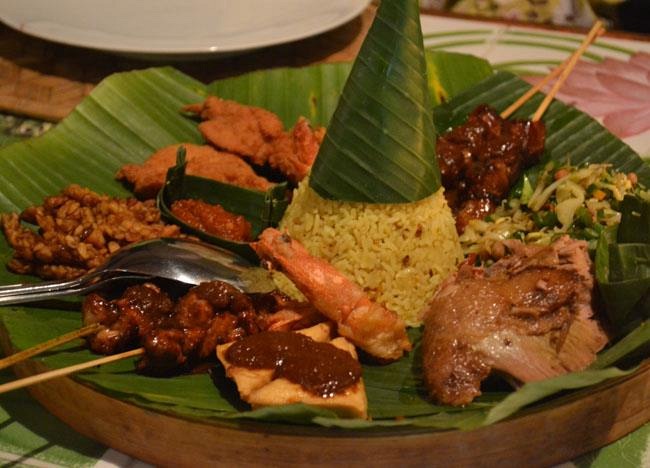
A mini rijstafel is a meal to be shared. Rijsttafel is a Dutch word that literally means “rice table”, a name that has stuck since colonial times. Depending where you order, it usually comes out all at the same time and contains a mixed selection of Balinese and Indonesian delicacies like Bebek betutu (smoked duck), chicken with sambal, prawns, pork & chicken sates, sayur urap (mixed Bali vegetables), potato croquettes, tempe, tofu and yellow nasi tumpeng (rice cone).